About Reflexology
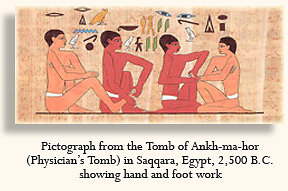
Reflexology is an ancient treatment. The first evidence of pressure therapy being used as a preventative and therapeutic medicine has been found on inscriptions in ancient Egyptian tombs dating back to 2500 BC.
What is Reflexology?
Discover a gentle, non-invasive therapy designed to support your entire well-being - not just individual symptoms. The holistic approach works on the principle that your body is reflected in specific zones on your feet and hands, each lined to different organs and systems.
By applying carefully targeted pressure to these reflex areas, the treatment encourages deep relaxation, helps restore balance, and promotes your body's natural ability to heal. The result is a calming, restorative experience that leaves you feeling refreshed, rebalanced, and better equipped to maintain overall health.
History of Reflexology
Reflexology is grounded in a well-documented history shaped by both medical research and clinical practice. In the late 19th century, Sir Henry Head demonstrated a neurological link between the skin and internal organs, laying important foundations for understanding reflex pathways. Building on the body's integrated response systems, Sir Charles Sherrington showed that stimulation in one area of the body produces measurable effects throughout the entire nervous system.
In the early 20th century, Dr William Fitzgerald reintroduced "Zone Therapy," a practice with roots in ancient healing traditions from India and China dating back thousands of years. Eunice Ingham later refined this framework in the 1930's, who mapped specific reflex points on the feet and devloped techniques that form the basis of modern reflexology today.
For those seeking a therapy informed by both histrorical tradition and scientific exploration, reflexology offers a structured, evidence-informed approach focused on supporting the body's natural balance and function.
Reflexology & Health Conditions
When the body is affected by illness, injury, or prolonged stress, its natural equilibrium can begin to shift. In reflexology, this is understood as a disruption in the flow of vital energy through the body's interconnected pathways. When these channels become congested or restricted, communication between systems may be less efficient, potentially impacting how well the body maintains balance and function.
Regular reflexology sessions are designed to address these imbalances, supporting clearer energetic flow, encouraging systemic harmony, and promoting a more consistent state of well-being over time.
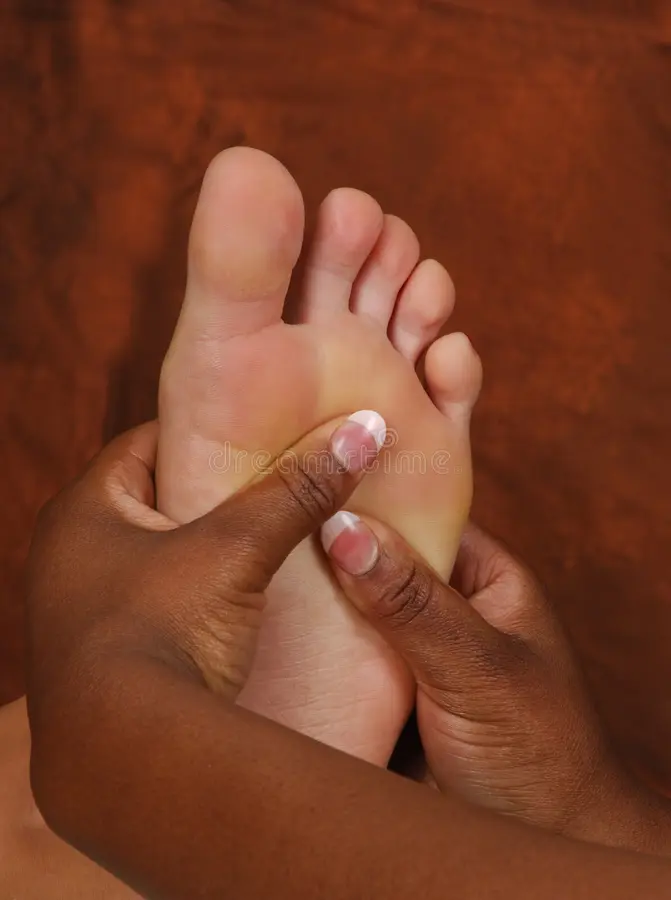
Reflexology is a gentle, non-invasive therapy that can be safely incorporated into your ongoing wellbeing routine, even if you are managing common conditions such as:
- Headaches
- Irritable bowel syndrome
- PMS
- Back & Neck discomfort
- Stress
- Diabetes
- Or symptoms associated to Menopause
For clients who value consistency and long-term results, regular reflexology sessions offer more than temporary relief. They are designed to support:
- Deep relaxation
- Enhance overall vitality, help restore and maintain the body's natural equilbrium.
- Over time, the holistic approach can contribute to a greater sense of balance, resilience, and sustained wellbeing.

You can try our Stress and Tension Hand Reflexology. (AOR)
I have had a few treatment sessions with Christine and have told many of my friends about her professionalism and the passion she has for the service she delivers.
Christine has a very calming aura which makes you feel at ease as soon as you come into contact with her. She explained how reflexology worked and what to expect from my first session. I felt very relaxed on my way home and slept like a baby that night. Sidonie, Business Owner.